
After 1 year of reading data
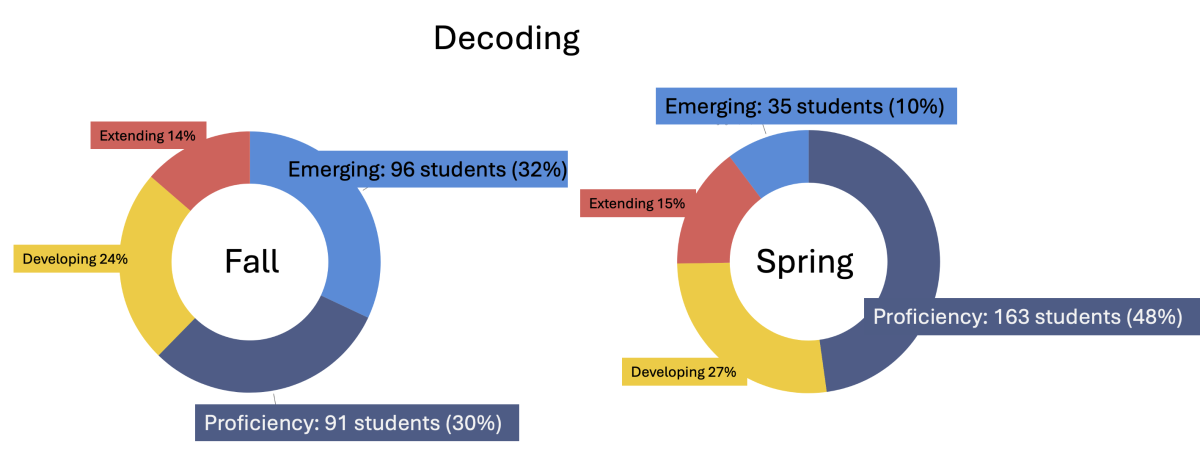
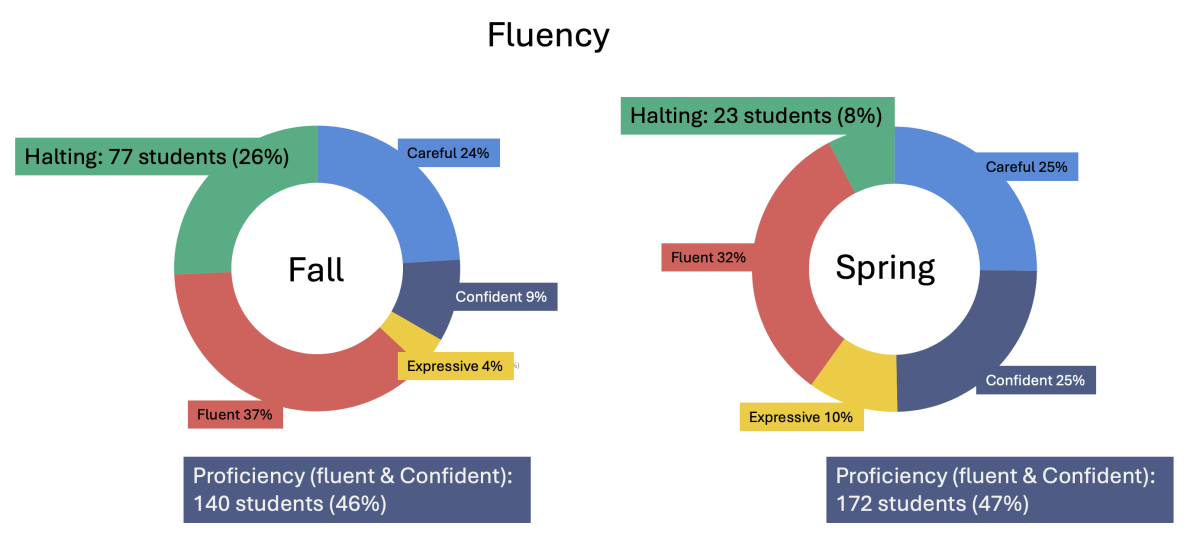 Through the use of DIBELS reading assessments conducted in September, our school was able to identify students with gaps in reading fluency and decoding skills, as well as pinpoint specific areas where additional instruction was needed across all grade levels.
In the months that followed, teachers collaborated in grade-level teams to plan and organize targeted lessons and units designed to address identified areas of need.
In June, a second reading assessment was administered. The results demonstrate that the efforts of the Walter Lee teaching staff led to measurable improvements in both decoding and fluency.
Decoding: There was a 12% decrease in the number of students identified as Emerging readers and an 18% increase in the number of students assessed as Proficient readers.
Fluency: There was an 18% decrease in the number of students assessed as Halting readers and a 1% increase in the number of students assessed as Proficient readers.
These results reflect the positive impact of targeted instruction and collaborative planning on student reading achievement. Moving forward, teachers will continue to use assessment data to guide instructional planning and ensure that reading instruction is responsive to student needs. In addition, the school will adopt a comprehensive reading assessment tool that provides data on not only fluency and decoding skills but also reading comprehension. This will allow teachers to gain a more complete understanding of each student's reading development and further target instruction to support continued growth and achievement.
Updated:
Wednesday, June 24, 2026